Entry · Ref OHH_2RBK
How to Store and Protect Your Football Card Collection
- Posted
- 2026-11-16
- Last amended
- 2026-11-16
- Account
- @packsidestories
Football cards are more than just pieces of cardboard. They represent moments in the sport, from a rookie's first appearance to a star's prime. Over time, the condition of these cards directly affects their value, whether you collect for fun or with an eye on the long-term. A card that looks pack-fresh today can quickly lose its gloss if stored poorly. That is why understanding how to store and protect your collection matters as much as knowing which cards to chase.
This article offers practical points to check when you organise your collection. The aim is straightforward: keep your cards in the state they deserve, so you can enjoy them for years without worrying about avoidable damage. Good storage does not need to be complicated or expensive, but it does require a little care and consistency. That is the kind of guidance for football card collectors that makes the difference a few years down the line.
Choose the Right First Line of Defence: Card Sleeves
The first thing that touches the card is often the sleeve. A card sleeve is a simple plastic pocket that slips over the card. It protects the surface from fingerprints, dust, and light scuffs. Not all sleeves are the same. Look for ones made from archival-safe, acid-free materials. The standard size for most modern football cards is a penny sleeve, which fits snugly without forcing the card in. If the sleeve is too tight, you risk bending the corners. Too loose, and the card can slide around and get scratched.
When you slide a card into a sleeve, do it gently. Hold the card by the edges and let the sleeve do the work. Avoid touching the front or back surfaces. The oils from your skin can leave marks that are hard to remove, especially on matte finishes or dark borders. For higher-value cards, such as an autograph or a relic card, consider using a thicker premium sleeve. These offer a bit more rigidity and a better seal against dust.
Top-Loaders and Semi-Rigid Holders: The Next Level
A sleeve alone is not enough for cards that you handle often or that travel with you. A top-loader is a hard plastic holder that the sleeved card slides into. It adds structural support and prevents bending. Most top-loaders have a small notch or tab that makes it easy to remove the card when needed. For cards you plan to display on a shelf or store in a box, top-loaders are the standard choice.

Semi-rigid holders are a lighter alternative, often used when mailing cards. They give some protection but are not as stiff as a top-loader. For everyday storage in a drawer or a cardboard box, top-loaders win. Just make sure the top-loader fits the card size. A standard card fits a 3" x 4" top-loader, but thicker cards, like some numbered cards or inserts with extra layers, may need a slightly wider holder.
Storage Boxes: The Home for Your Collection
Once your cards are sleeved and in top-loaders, they still need a home. A storage box designed for trading cards is the best option. These boxes are usually made of cardboard or plastic and come in sizes that hold a few hundred to a few thousand cards. The key is to keep the cards upright, like books on a shelf, so that weight does not press down on the lower cards. If you stack boxes on top of each other, do not overload them. A reasonable guideline is to keep stacks no higher than three or four boxes, to avoid crushing the cards at the bottom.
For long-term storage, consider a box with a tight-fitting lid. Dust and light are the enemies of card surfaces. A box that seals well keeps both out. If you live in a humid climate, a plastic box with a silica gel pack inside can help control moisture. Avoid storing boxes in basements, attics, or garages where temperature and humidity swing wildly. A stable environment, like a bedroom or a home office, is ideal.
Climate Control Matters More Than You Think
Temperature and humidity are silent threats. Heat can warp cards, cause ink to fade, and make the cardboard brittle. Humidity encourages mould and can make the cards stick together. The sweet spot for card storage is between 15 and 22 degrees Celsius, with relative humidity around 40 to 50 percent. If your collection is large or includes high-value pieces, a small dehumidifier or a hygrometer (a humidity gauge) is a worthwhile investment. These simple tools give you a reading so you can adjust the room conditions if needed.
Direct sunlight is another problem. Even a few hours of strong sun through a window can bleach a card's colours. Keep your storage area away from windows, or use curtains or UV-filtering film. If you display cards in a frame, choose UV-protective glass and keep them out of direct light.
Handling Cards: The Golden Rules
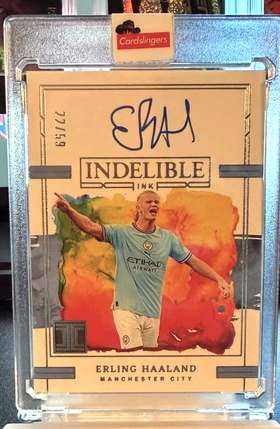
How you handle a card matters every time you pick it up. Always wash your hands before sorting through your collection. Better still, wear cotton gloves for valuable cards, though clean, dry hands are usually fine if you are careful. Hold the card by the edges and avoid touching the surface. If you need to examine the card closely, place it on a clean, flat surface. Never use a card as a bookmark or a coaster, and never rest it against a hot surface like a radiator or a laptop vent.
When you remove a card from a sleeve, do not pull it by the top edge. Instead, gently push the card from the bottom, letting the sleeve slide off. This reduces the risk of bending the corners. For cards in top-loaders, press the sides of the holder slightly to release the pressure, then slide the card out. Patience is your friend.
Organising By Type and Value
Good storage also means good organisation. It makes finding a specific card easier and helps you keep track of what you own. Many collectors sort by player, team, or series. Others group cards by type: base cards, rookie cards, insert cards, autographs, and relic cards. A numbered card, which is one of a limited run, often deserves its own section because of its rarity. A simple label on the storage box or a divider card inside can keep everything tidy.
For the most valuable cards, consider a separate, smaller box or a binder with acid-free pages. Some collectors use a fireproof safe or a safety deposit box for their top pieces. That is a personal decision based on the value of the collection. Even a basic fireproof document bag can offer extra peace of mind.
Regular Checks and Maintenance
Storage is not a set-and-forget activity. Once a year, go through your collection. Check for any signs of damage: bent corners, surface scratches, discolouration, or moisture marks. This is also a good time to rotate cards that you have stored in a display case or a top-loader on a shelf, to prevent any one side from fading. If you find a card that has started to warp or stick to its sleeve, remove it carefully and place it in a fresh sleeve. Early action can stop a small problem from becoming a big one.

This kind of routine care is exactly the practical guidance for football card collectors that helps protect the time and money you have put into your collection. A few minutes of attention each year can save a lot of disappointment later.
The Bottom Line on Protection
Storing and protecting football cards is about small, consistent habits. Use quality sleeves and top-loaders. Keep the collection in a stable environment. Handle each card with care. Organise so that you know what you have and can find it easily. And check in on the collection from time to time. These steps are simple, but they work. They keep your cards looking good and holding their condition, whether you are building a set, chasing a rookie card, or just enjoying the hobby. The right approach makes the difference between a collection you are proud of and one that slowly loses its appeal.